Friday, June 15, 2012

Good bye LB

Onward and upward! I have officially graduated from LB with three associate degrees- General Studies, AAOT and Associate of Science with emphasis on Journalism. I loved every minute of these past two years. I have met many wonderful people, learned a lot and had a wonderful time as a student. Last night was the icing on the cake.
Walking at graduation was a wonderful experience. The wait was long but actually went by relatively fast. I ended up being the very last graduate to enter the hall, which was kind of fun. The reading of the graduates' names didn't take nearly as long as we all figured it would.
One of the things I loved about the evening were the bagpipers. I've always loved their sound. My father played the bagpipes but I never got the chance to hear him play. My brother told me tonight that he heard him play them one time.
My hubby, both daughters and grandson were all there to share the moment with me. So was my brother who told me after the ceremony that our parents would be very proud of me. That made me feel wonderful- my father died when I was only 3 1/2 years old. Mom passed away about a year and a half ago. I am only the fourth person of my generation on Mom's side of the family to receive any type of college degree.
Now, I am officially a graduate. I will be working this summer- if you can call it that- writing for the Scio and Jefferson newspapers. Considering how much I love to write, do I really need to consider it work? Well, I will be bringing home a paycheck, so I guess so!
I want to thank my family for all of their support throughout these past two years. I honestly couldn't have done it without you! Of course, that includes my darling grandson, Sebastian. He spent many mornings asking why he couldn't go to school with Grandma and offering to help me with homework! Did I mention that he is four years old? And, a special thanks to Rob for encouraging me, advising me and sharing his vast wealth of knowledge. It's been a great ride. I can't wait to see where my next adventure leads.....Go Beavs!

Rob Priewe and me after graduation at the Linn County Fair and Expo Center in Albany. The amazing evening saw about 350 graduates receive diplomas.

Tuesday, June 5, 2012

JN134 Final project- The parade didn't pass them by

Trent Parker, two, of Scio, watches  the parade passing by fair goers on Saturday, May 19, during the Linn County Lamb & Wool Fair in Scio. Young Trent rode with his father, Jared Parker, in a vintage fire truck owned by the Scio Rural Fire Protection District. This is Trent's second time riding in the parade with his dad. His twin sisters, Melanie and Emily, seven, rode in the bed of the fire truck along with several other volunteers' children and Bella the fire dog.
Elizabeth Badger, 10, of Smith River, California hands a sticker to Alex Swenson, six, of Harbor, Oregon during the annual Azalea Festival in Brookings, Oregon. The festival is held every Memorial Day weekend. While Alex liked the sticker- a ninja- he is much happier when parade participants toss candy his way.  The hour long parade drew throngs of viewers along Chetco Avenue before it turned up the Oak Street hill and finished at Azalea Park.

On Saturday, May 19, Sparky, the fire pup, greets parade goers of all ages during the Linn County Lamb & Wool Fair in Scio. The parade route passes by the ZCBJ Hall, seen here, on its way down Main Street and past the reviewing stand. Sparky, who asked to not be identified as anything other than Sparky, is the daughter of volunteers for the Scio Rural Fire Protection District.


Dad Adam Thompson holds back son, Kyle, three, as the parade approaches  the Thomas Creek Bridge in downtown Scio. Older brother, Josh and neighbor, Dar Sanders, anticipate the candy they are expecting to fly their way. The parade is the highlight of the Linn County Lamb & Wool Fair in Scio. The fair, held the third weekend in May, kicks off the fair season in the Mid Willamette Valley.


Two year old Brian Downing stands in the street near the end of the Linn County Lamb and Wool Fair  on May 19 in Scio. With candy already in his bag, Downing waits for more to come his way.  

Wednesday, May 30, 2012

Northwest connections

What a marriage proposal!

Social media/youtube at it's best! Well, pretty awesome anyway. This clip has gone viral on youtube. It's a marriage proposal of epic proportions set to a song by Bruno Mars. Filmed in Portland and, according to the story I saw on ABC News, the people in the clip are all theater people so performing is something they do. My guess is that it went viral after Bruno Mars posted something on twitter about it.
http://www.youtube.com/watch?v=5_v7QrIW0zY&feature=related


Photographer to loggers

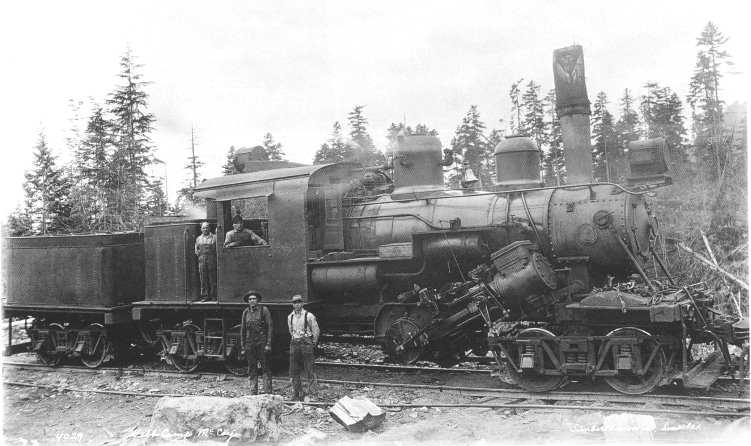
I came across photos taken of and by Darius Kinsey (1869-1945) when I was in Brookings last weekend. Born in Missouri, Kinsey was in Washington by the age of 20. His claim to fame was that he photographed logging camps and the people who worked and lived there throughout the Northwest. He also loved to photograph trains. In some circles, he was known as the Ansel Adams of logging. While he traveled the Northwest photographing loggers and their work, his wife Tabitha was at home in Sedra-Woolley, Washington where she developed the plates he returned with.
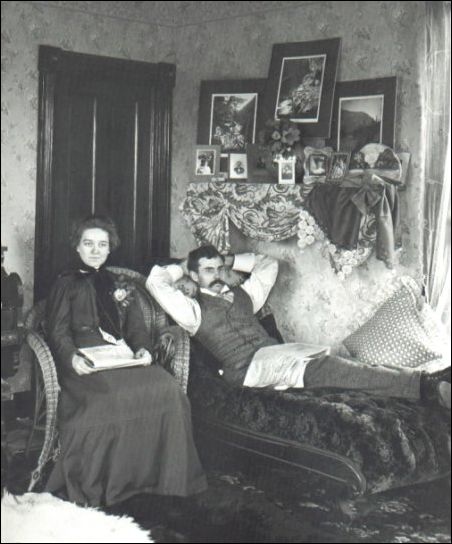
Tabitha and Darius Kinsey at their Sedro-Woolley, Washington home in early 1900. 


Vanport Flood

It was the second largest city in Oregon the morning of May 30, 1948. Before the day was over, it was totally destroyed. Vanport City, Oregon was built as housing for workers at the Kaiser Shipyards. At one time, over 40,000 people lived there. By 1948, the population was down to about 18,000. With houses standing empty, the Housing Authority of Portland opened Vanport College to attract returning veterans. After the town was destroyed, the college refused to die. It moved to downtown Portland and is now Portland State University.

Many of the returning veterans who were attracted to Vanport were African Americans. Many of those who lost their homes remember the day like it was yesterday. Most barely escaped with the clothes on their backs.

A 200 foot span of the dike holding back the Columbia River gave way at 4:05pm, washing the town away so quickly that by nightfall, Vanport was gone. Fifteen people died although by some accounts there were more whose bodies were never found. Like officials did during Hurricane Katrina, authorities told Vanport residents they were perfectly safe. "REMEMBER:
                                       DIKES ARE SAFE AT PRESENT.
                                       YOU WILL BE WARNED IF NECESSARY.
                                       YOU WILL HAVE TIME TO LEAVE.
                                       DON'T GET EXCITED."

Vanport residents, including her children, were instantly homeless following the break in the dike. People were billeted wherever a place could be found.
Vanport City, Oregon- destroyed by flooding on May 30, 1948, leaving over 18,000 people instantly homeless.

VANPORT
If it did nothing else, the Vanport Flood brought about changes in public housing in the Portland area.

Friday, May 25, 2012

Sports/Action

Emily Unrau prepares to pull her hair back before getting strapped into the bungee trampoline ride at the Linn County Lamb and Wool Fair. Unrau, a seventh grader at Scio Middle School, was on the ride because of a challenge from her little brother Devon.


Emily Unrau goes up in the air while on the Bungee Trampoline ride on Saturday afternoon at the Linn County Lamb and Wool Fair in Scio. Unrau wasn't afraid as she thought she would be despite not being a big fan of heights. One trick she did not try was a somersault in midair.
Emily Unrau is all a blur as she spots the trampoline on her way down as fair goers look on. The Scio seventh grader was on the ride thanks to a challenge from her younger brother, Devon. The Unraus, who own a dairy farm southeast of Scio, were in town for the Linn County Lamb and Wool Fair.


Tuesday, May 22, 2012

Smoke detector reminder

Debbie and John Nuber of Scio could have lost their lives in the fire that destroyed their home two weeks ago. Instead, they were saved by their working smoke detectors. Last week, the couple erected this sign as a reminder to people regarding the importance of working smoke detectors. The home was a total loss but the couple got out safely because their smoke detectors worked. 

Sunday, May 20, 2012

Update on Jefferson bridge

ODOT officials, along with personnel from Hamilton Bridge Construction of Springfield, shored up the sagging bridge deck of the Jacob Conser Bridge that spans the North Santiam River in Jefferson to allow limited access. According to an ODOT update, Oregon Highway 164 is now open to vehicles under 80,000 pounds.

Saturday, May 19, 2012

Free shoot

Assistant Division Chief Howie Ellis controls hot spots during an early morning fire on Thursday, May 17 in Scio. The barn, which was filled with hay, was a total loss. The boat sitting outside and the hay inside the barn were destroyed. A battery charger was to blame. No firefighters, the owners or their animals were injured.


Robert Primm, left, and Pat Burger, members of the Scio Fire Rural Fire District's volunteers on the swift water rescue team, during training in the Calapooia River near Monteith Park on May 12. The pair were joined by three more team members as well as personnel from five other emergency response organizations in the area. For Scio's team, this was only their second training session following their 10 hours of classes. Less than three weeks later, team members responded to their first actual emergency on May 18, when a drowning occurred in the Gates area.

Friday, May 18, 2012

Bridge to Jefferson closed

The Conser Bridge that leads to Jefferson was closed just after noon on Friday when damage was discovered on the west end of the concrete structure. According to ODOT officials, a local resident reported a sharp bump in the westbound lane. The bridge was then closed to all except pedestrians, motorcycles and bicycles. Once ODOT began their survey of the damage, the bridge was closed to all traffic.
Built in 1933, the bridge has served Jefferson and the surrounding areas as the quickest route to Albany and to Interstate 5. Now, it appears people will need to find an alternate route for at least the near future. Jim Squire, ODOT's District 4 Maintenance and Operations Manager, said the bridge will remain closed until it is determined to be safe for all traffic. A piece of rebar inside one of the stringers that holds the overhead arch in place broke, causing the beam underneath the bridge to begin to sag. Hamilton Bridge Construction was contacted to jack the beam up in an attempt to stabilize the concrete structure. A bridge engineer was expected to inspect the bridge on Saturday.
Meanwhile, traffic is being rerouted either north toward the Talbot Road interchange or to the North Jefferson exit to Interstate 5 or through Scio. Squire said ODOT will work closely with the communities affected by the closure. He also said that ODOT will inspect the bridge completely to make sure that it is structurally sound. "We will be looking at all components before we open this bridge back up," he said Friday evening.

The westbound lane on the west end of the Conser Bridge leading to Jefferson had  dropped well over two inches when the Oregon Department of Transportation closed the bridge for safety reasons. 

This stringer that helps hold up the concrete arches was partially broken before ODOT workers used a jackhammer to chip some of the concrete away to expose the 80 year old rebar. The pieces seen here originally were secure on the bridge platform. One piece was corroded and broke while the other one snapped. No time has been set for the bridge to reopen.

Thursday, May 17, 2012

Media blog #2- Print vs online


News


Newspapers. Some people start their mornings out by pouring a cup of coffee and opening the newspaper. Others open up Google and find the latest news. For those of us who like to hold the paper in their hands, an online version just doesn't cut it. For those who like to see what's going on in the world at large, online is really the only way to go. The Albany Democrat-Herald is the local newspaper that caters to both tastes. According to their website, the D-H as it is typically called, has a circulation of 16,000 with their website garnering nearly 1 million page views per month. There are pros and cons to both online and print newspapers. The bottom line, in my opinion, is let the reader decide. Keep print newspapers, keep online newspapers. Together, they help educate the masses. Separately, readers are the losers.

Describe

The primary focus of both the online and print version of the Democrat-Herald is local news and sports. Today's edition (May 16, 2012) focuses on the primary election results, an upcoming Civil War reenactment and area sports results. The print version is laid out with local news and information filling the front portions of the section A.
Just under the masthead, the top story above the fold is about the Albany fire, police levy passing. The story has a quote from the mayor of Albany, thanking voters for "seeing the value of our city's police and fire departments." There is some national and international news but those stories do not hold a prominent position in the paper. There is only one main photo on the front of the print version. This photo was taken at the Linn County Courthouse in Albany, adding yet another community connection. The other two main stories, while not just specific to Albany, they do have relevance to the community. One is about Scio's Will Tucker retaining his Linn County Commissioner seat. The other is a story on a state race for attorney general.
The inside section includes several photos of participants of the Civil War reenactment. Inside that section, there is a wide variety of sports photos. The sports page features West Albany High School golf- both men's and women's- as well as Beaver baseball, which, while taking place in Corvallis, a lot of Beaver fans live in Albany so this story fills the college sports niche. The three photos on the first sports page feature West Albany athletes- sure to please Bulldog fans!
The online version is different in that there are no actual stories on the home page. Instead, there is a slide show of photos with a teaser for each and a link so readers can find the entire story. The online version makes it easier to find more stories at a glance because of the links. For example, shoppers at Target would be interested in reading about the remodeling at the Heritage Mall store. There is a lot of advertising on the home page as well as a couple of videos and links to the special editions the D-H publishes.
As far as advertising, both the online and print versions center their advertising on local businesses- Fisher Funeral Home. Grocery stores-4 Seasons, restaurants- Sybaris, Bailey's, banking institutions-Selco Credit Union and gardening centers-Peoria Road Farm Market- seem to make up the bulk of the advertising in both versions. There are a lot of ads but they are spread out, with no more than two or three on a page, so they do not seem to clutter up the print version.The print version's classified section is much easier to navigate than the online section.

Analysis
In my opinion, the thing that really sets both versions apart is that they do focus on local issues and stories. Considering the only real competition are other newspapers owned by the same company (Lee Enterprises), there really is no competition because the Corvallis, Albany and Lebanon newspapers often share stories that are specific to local interests.
The biggest difference between the two versions is that the online version offers readers an easier way to find more stories at a glance. Considering how many people are on the go, being able to find what story you are most interested in- not everyone is most interested in the front page stories!- using the online version allows readers to streamline their reading preferences much easier.
Another difference is actually hearing from Hasso Hering. While it's always good to read the written word, Hasso Hering being on film brings him to life better. It also allows readers a better chance to interact with him. It's much more fun to yell or complain- or complement- when you can see someone on screen rather than just read his words in print.
The print version makes it much easier for readers to keep specific stories and photos for their scrapbooks. While that might not seem important to some people, for others, it's fun to clip and then keep. It's a little harder to keep a link.

Interpret
The primary target audience for the D-H is people in the Albany area. While it is the largest newspaper in Linn County, it does not cover the outlying areas as much as people who live there think they should. The major population center is where most of the subscriptions come from and where most of the advertising dollars are geared so that is where the news is centered.
Since the target group is Albany area residents, most of the ads are Albany businesses. All of the ads in the front page section are either Albany businesses- Kutsch & Renyer Dentistry, Pyburn & Sons, and  Mid-Valley Hearing Center- businesses that have a strong Albany connection- NW Natural Gas, Allied Waste- or are businesses in Corvallis with no similar business in Albany-Creative Crafts.
I think they do a good job, both in print and online, in making sure ads don't offend people and that the ads seem to make sense with the stories on the same page. For example, in the print version, when you open the front section, the first ad visible declares, "Shop locally." What better way to get the paper's message across that they are the local paper? The online version has a nice local ad on the home page, again promoting the fact that the D-H is the hometown paper.

Evaluate
The two strengths of the print version would have to be the strong front page- the stories all election results, most of them local. With the primary being yesterday, that's big news. The other front page feature- In the News- gives readers a very brief look at what's happening outside the area.
Another strength is the sports page. It provides great local coverage as well as some national sports news. There are also some great photos.
A weakness in this particular issue is that there is only one real photo on the front page, and it's not particularly exciting. The other two photos are mug shots- one of them not very becoming for the subject- and that's it.
Another weakness is the layout of the opinion page. The letters to the editor, which are all from area residents, should be at the top of the page. These are the people who the paper serves and who is the target audience for the paper, including their advertisers. Give them the top of the page. The political cartoon can be moved to the bottom.
In the online version, the biggest strength is the slide show with what are viewed as the top stories. It makes it very easy to click through and see if there is a story of interest and then equally simple to click on the link to get to the story.
Another strength is the search box at the top of the home page. I use that quite often to find stories about specific people or events. It's much easier than trying to search manually.
A weakness I see is the open up ads. Whenever your mouse arrow gets near one, it opens up, sometimes filling the entire page. While I understand the need for advertising, those can be more annoying than helpful.
Another weakness is trying to utilize the jobs link. If I wanted to look elsewhere for a job listing, I would go to another website. I want to look for jobs in Albany, not something specific, just in general.

Engage
I don't really interact with either the print or online version. I'm not big when it comes to sharing opinions either online or in print. I follow the D-H on facebook. It's kind of nice to get an early look at specific stories. I don't follow them on twitter although I do follow a couple of the reporters.

Conclusions
I think this assignment was interesting. It taught me to think twice about only reading one version and not the other. To get all the local information as well as breaking news and world news, it's both versions together that make the difference.

The Albany Democrat-Herald then.....


and now.


Saturday, May 12, 2012

Canzano speaks to college journalists

John Canzano, sports columnist for The Oregonian, was the keynote speaker at the Oregon Newspaper Foundation's annual Collegiate Day, held at Linn-Benton Community College on Friday, May 11 in the school's commons area. Canzano was introduced by Ryan Frank, the publisher of the Oregon Daily Emerald.
Canzano's goal for the day was to share something he learned about journalism at each of his stops before landing at The Oregonian.
"You are never as good or as bad as you think you are," he told the nearly 100 collegiate journalists and their instructors. He said the newspaper business is not dying but "has changed and reinvented itself." Canzano observed that he never expected that, in addition to the newspaper, he was also doing television and radio shows.
Probably his best piece of advice in his hour long talk was to "stay flexible but stay true to the content." He said that journalists who are flexible and open-minded are the ones who thrive.
Canzano described how he had, at age 17, gone to his local newspaper, asking to write editorials. His pitch was that he could bring a new voice to the paper. The editor decided to give him a chance and Canzano wrote a commentary on the lack of respect from people during the National Anthem during a high school football game. From there, he wrote one commentary a month before going off to college.
Following his graduation, he taught English and Spanish at a public high school but decided that was not what he wanted to do with the rest of his life. His first newspaper job was for that same small community newspaper where he found himself as the lone sports writer. He had found his niche. "You have to love this if you are going to excel," he told the collegiate journalists. "It didn't feel like work to me," he said of his sports writing job.
He moved up to the Santa Cruz Sentinel where suddenly, he became recognized as "a sports guy." With the title came reporting on sports he really didn't know a lot about. "I learned how to write about them." His goal was to connect with the people so he could get something that was compelling to write about.
Next, Canzano found himself at the Fort Wayne News Sentinel where he covered Indiana basketball during Bobby Knight's heyday and Notre Dame football. "This is where I learned how to cover a beat." In order to get good stories on a consistent basis, "I never turned my tape recorder off." He also learned how to work for a bad boss until he decided to quit.
He drove from Ft. Wayne to Tallahassee, Florida, "for no reason," deciding he was done with the news business. He got a job at Barnes & Noble and applied for grad school at Florida State University. As the sports season drifted further away, he realized he missed writing.
Unbeknownst to Canzano, the Fresno Bee was searching for him to offer him a job. He went through a number of interviews before meeting up with the man who would become his mentor, Charley Waters. "I was 28 years old and the youngest sports columnist in that size paper in the country." He was thrilled and he heeded Waters' advise. "There's no more influential person than Charley." He said he always paid attention to what Waters said. "It's like having a grandpa who knows the business." He encouraged everyone to find their mentor.
He was a finalist for a job at the Chicago Tribune but didn't get it. Canzano's dream job was to work for the San Jose newspaper but when he got it, he realized the news business had shifted. He knew he needed to find an angle to be happy.
That was when the Oregonian discovered him. He went to Portland for an informal interview, thinking that he could stay in San Jose as the number five sports reporter in a large market or move to a smaller market but as the number one columnist. He called the move a no brainer.
He writes about people- not just the Blazers or Ducks. He finds an angle. A great example was a story he mentioned written the end of April. He wrote about a young girl with Downs Syndrome who not only gained Canzano's respect but also that of the other athletes and parents at a local youth track meet.
"Don't let anyone tell you this industry is dying." He said it is changing but that journalists are still important to people. As to the collegiate journalists, his advice is to get that dream job and "make it your own."

Friday, May 11, 2012

Joyce Carol Oates mesmerizes audience


On Wednesday, May 9, the ballroom at the CH2M Hill Alumni Center on the OSU campus almost filled to capacity to hear world renowned author Joyce Carol Oates. The author was recently named the first recipient of the OSU Stone Award for Lifetime Literary Achievement and was scheduled to receive the actual award the following day. Her words, her smile and her quick wit when answering questions kept audience members mesmerized for over an hour.

Lawrence Rodgers, the executive dean of the Division of Arts and Sciences at OSU began the evening with a welcome, some special thanks and a brief description of the Stone Award. He also thanked Marjorie Sandor and Molly Brown and her staff at the OSU Foundation.

Keith Scribner, an English and Creative Writing associate professor, then had the privilege of introducing Oates. He gave a brief bio of Oates' accomplishments and some of the reasons why she was receiving the inaugural Stone Award. "Her work compels us, speaks to us like no others." He added that it is easy to get lost in Oates's words. "To read Oates is to be inhabited by her."

Oates took the podium with a rousing welcome by the audience. She spoke briefly about her writing, especially regarding the many voices she uses in her stories. "All the voices become universal voices," she said before beginning with the first short story of the night, San Quentin

Set in the famous California prison, the story is based partly on her own experience teaching there. The audience listened in rapt attention as Oates' wove the narrative, using two of the voices she spoke of earlier. The story had two very distinct voices- that of the teacher and that of the prisoner. She also used many descriptive analogies to move the story along.

Brutal Murder in a Public Place proved to be a rather whimsical story about a bird stuck in the Newark Airport. Oates explained that the story came to her when she was in that airport and heard a bird chirping inside the airport. After she completed the reading, she said this was another voice that she decided needed to be heard. "It's a strange story," she added.

With Scribner moderating, Oates spent the next half hour or so answering questions. She also offered up some words of wisdom. "Most passionate writing is not premeditated." She told the audience that she likes to write about common people and become the "voice of forgotten people."

One of the things I found the most interesting was how easily and quickly she was able to answer some of the questions. She also showed a lot of humor, especially when bantering back and forth with Scribner. 

Oates's successes with the printed word gives hope that books will indeed survive. The thoughts of Jeff Jarvis about killing books to reinvent them did not seem to be relevant in Oates's world. She firmly believes in sharing the written word in both her books and when she gives readings. As she was signing autographs after the reading, it was very obvious that she enjoyed the experience of interacting with readers. Would that happen if no books were being offered for autographs?

Thursday, May 10, 2012

Landmark assignment

 Landmark
Three year old Aiden Presson rides Jasper the Frog at the Brass Ring Carousel project in downtown Albany. Volunteers have been working on the project for nine years. The workshop and museum/gift shop are open to the public Mondays through Saturdays from 10am until 4pm and on Wednesdays from 10am until 9pm.


Portrait
Alonzo Fandrem and his dog, Simon, relaxing at Monteith Park on one of the first sunny days of spring on April 27, 2012. The pair spent the morning running through the park while Mom and Dad, Amy and Kevin Fandrem looked on. Simon truly is Alonzo's best friend!


Feature
Four year volunteer Steve Yellan carves Kitty the Unicorn whose likeness appears behind him. Yellan inherited this animal about four months ago. A total of 58 animals will complete the project with 52 of the animals on the carousel at any given time. Extras will include special holiday animals. Volunteers are doing all of the work to create the carousel which will eventually be housed in a new building where the existing 1st Avenue building now sits.

Wednesday, May 9, 2012

Joyce Carol Oates

Joyce Carol Oates smiles while signing autographs following her readings at Oregon State University. (Need to work on fixing this!)


Joyce Carol Oates graciously signs autographs for many audience members who packed the ballroom at CH2M Hill Alumni Center on the OSU campus on Wednesday, May 9.

Friday, May 4, 2012

Photojournalism assignment 5

 Overall

On duty in the Courtyard Cafe, Judi Madarus serves up helpings of kindness with her favorite phrase. "Have a great day!"                                 


Medium
Student Henry Winowiecki enjoys a visit with Judi Madarus between classes at Linn-Benton Community College.


Closeup
One of Judi Madarus's passions is flowers. In order to give a splash of color to the Linn-Benton quad, Madarus plants tulips, daffodils and sunflowers in the quad outside the Courtyard Cafe.

Portrait assignment


Pat Weatherford is one of the volunteer division chiefs for the Scio Rural Fire District. He is also a professional firefighter in Albany where he is a lieutenant, currently at Station 12.  He has been a firefighter for 13 years. He shares his passion for fire service with his mother, Kathy, who is a long-time member of the Scio Rural Fire District Support Team. He is married to former volunteer firefighter, Holly Carroll Fisher and has a four month old son.

Thursday, April 26, 2012

Advertising- Obama reelection ads


Introduction

It's that time of year yet again- political candidates are gearing up their campaigns to be elected. In order to get the attention of their constituents, politicians either a. promote their own good deeds or b. put down their opponents. Sadly, many choose the b. option, leading to campaigns that contain the same type of mud slinging that has crowded campaigns for decades. I chose an ad campaign for President Obama's reelection bid. The ads are currently on YouTube. I have not yet seen them on television. Which type of ad works better? Which is more aesthetically pleasing to audiences/voters?

Describe
I chose four very different yet powerful ads to review.

The first, called Gen44, begins with President Obama speaking directly to the target group- young voters. He praised their contributions to his 2008 victory before telling these same voters that he is now counting on them again. He goes so far as to mention “tapping into your networks,” and ends by seemingly putting his reelection in their hands. “Because the best advocate of this campaign isn't me, it's you.”
This ad plays on the visual of American pride with Obama standing just to the left of an American flag. There is also nondescript music playing softly in the background. The ad ends with the Obama/Biden campaign logo. It is 58 seconds long and can currently be viewed on YouTube (see link above). The Gen44 ad is part of Obama's reelection ad campaign. I found 12, including several in Spanish.

The second ad utilizes actress Eva Longoria as the lone person in the ad. She is immediately identified as the National Co-chair of Obama for America. No props are used and, unlike the Gen44 ad, no flag is present. However, the background is blue and Longoria wears a red top, giving voters a patriotic look and feel. Not only does Longoria talk about how her parents told her she could do anything if she worked hard, she also notes that her sister with special needs taught her to be “courageous and compassionate.”
She then tells viewers that she lives her life day to day and it's what she sees in “everything President Obama does.” She then lists some of the issues he feels strongly on- affordable health care, access to education, and small businesses in the Hispanic community. She talks about how he has worked on immigration reform to give all people the chance to live the American dream. She ends the ad with a Spanish phrase along with the website where people can get involved.
This is one of the ads that also appears in Spanish. It runs 55 seconds and also ends with the Obama/Biden reelection logo.

Empower, Act, Organize is the third ad I chose to focus on. This ad is completely different from the first two in that it uses “plain folk” and has no actual dialogue. Instead, it shows people holding signs, inviting people to get involved, organize and act. It promotes the Day of Action on April 28 and pretty much a “Hey, America, let's come together!” feel to it. There is one other thing that really sets this ad apart from the first two. Instead of just showing the Obama/Biden names at the end, this ad is played in front of a wall plastered with placards that say, “2012, BARACKOBAMA.COM.
This is also the shortest ad at only 48 seconds. It too ends with the same Obama/Biden logo as the other ads.

The final ad I looked at is one called Kal Penn: Get Involved. Immediately, the ad tells viewers that Penn is an actor. What it does not do is identify him as the Co-Chair of the Obama for America campaign or as the Assistant Director of the White House Office of Public Engagement. Penn first thanks those in Iowa who got involved in the Obama for America campaign and urged viewers to also look at the Young Americans for Obama website. And, playing on the electronic uses of young voters, he tells viewers they can follow the campaign on Twitter or text a specific phrase to a specific number to get updates on their cell phones.
This ad runs 57 seconds and is played against a backdrop of an Organizing of America banner. A blue sun type logo, with a field of red and white rows is prominent across the banner. This is part of the overall Obama/Biden logo visible in two of the other ads.


Analyze

Each ad plays on a different persuasive techniques.
  1. Gen44- this ad is basically a combination of bandwagon and famous person testimonial. President Obama, easily a recognizable famous person (even to those who do not agree with his views) talks directly to young voters in order to get them to jump on his bandwagon to not only vote for him but to raise money for his campaign.
  2. Eva Longoria ad- This ad also utilizes the bandwagon and famous person testimonial. Longoria talks about working hard and President Obama almost in the same breath.
  3. Empower, Act, Organize- This ad incorporates the bandwagon and plain folks techniques. In this case, the people in the ad appear to be just regular Americans who are enticing people to join them in voting and taking action to insure Obama gets reelected.
  4. Kal Penn: Get Involved- Like the Gen44 ad, this one uses the bandwagon/famous person testimonial combination. While I have to admit, I had no idea who Penn was, the fact that he was immediately identified as an actor, made him appear to be a famous person. He too encouraged viewers to become part of the voting ranks.
    (Interestingly, Penn left the White House post about six months before this ad was posted on YouTube.)
All of the ads utilized the Association Principle because they each deal with associating patriotism with voting for, in this case, Obama. The ads appear to be very successful in utilizing what appears to be very personable video clips.

Interpret

I'd say each of these ads offers up something new for viewers to look at and to interpret. Probably the Empower, Act, Organize ad gives viewers a better idea that voting is important regardless of who you vote for.
Gen44 and the Kal Penn ad are focused on young voters which is evident immediately in each ad. The Longoria ad is focused on the Hispanic vote which is especially obvious at the end with the Spanish phrase and the fact that the web address begins with the word Hispanic. The Empower, Act, Organize ad actually has a much more general focus since it included ethnic groups and both young and older voters.
I don't really think any of the ads uses any stereotypes.

Evaluate

The strengths of these ads is that they all play on the patriotism of American voters. Each one has red, white and blue very prevalent in the layout of the ad.
The weaknesses in all four ads is the overuse of the Obama/Biden logo. This is especially true in the Empower, Act, Organize ad. Personally, I think it's a bit of overkill. The strength in the Gen44 ad is definitely the flag being visible throughout the ad. The Longoria ad's use of the actress as a spokesperson who can relate to the Hispanic voters is a huge strength while Penn might be considered the same to draw young voters to the cause. The Empower, Act, Organize ad's strength is the fact that it shows only ordinary people.
In my opinion, the most memorable one of the four ads is the Empower, Act, Organize ad because of its use of plain folks. While people like knowing famous people support the same candidates they do, they are often more impressed when it appears the person next door does.

Conclusions

I really learned to look closer at the content of ads because of this assignment. I was one of those people who often got on a bandwagon because my favorite actor was also on that same bandwagon. After seeing these ads, I found the Empower, Act, Organize ad my favorite because it used just ordinary people.  

Just for fun- fake campaign ads

Wednesday, April 25, 2012

Mathew Brady- father of photojournalism

 Mathew Brady
Mathew Brady, 1823-1896, is known as the father of photojournalism. He was the first photographer to the stars, so to speak. His portraits of such historical figures as Ulysses S. Grant, George Custer, Walt Whitman, and, his most famous, Abraham Lincoln, made him one of the most sought after photographers of his era.

Abraham Lincoln
Walt Whitman
Brady also photographed those not so famous with the same flare and dignity he gave to people such as Lincoln and Whitman.


Miss Bateman

Sister M. M. Joseph


Brady is best known for having captured the American Civil War in photographs. While all were originally attributed to him, Brady actually had upwards of 20 photographers who went into the field and took most of the photos. One of them, Alexander Gardner, went on to become the official photographer of the Union Pacific Railroad.

Brady's display in New York City that he called, "The Death of Antietam" drew people who wanted to see the death and destruction of the war. These photos showed the opposite of the romanticized and sterile version most newspapers were publishing at the time. 


After the war, people wanted to forget and Brady was forced to close his studios and eventually sell off his photos to the US government for a total of $25,000, enough to pay off much of his debt. Brady died alone and nearly penniless in 1896. He is buried at the Congressional Cemetery near Tip O'Neil, J. Edgar Hoover, and John Phillip Sousa. Much of his work has been preserved by the Smithsonian Institute and the Library of Congress.


Thursday, April 19, 2012

Extra credit JN201 Valley Writers Series

On Wednesday, April 18, students at Linn-Benton Community College had the wonderful opportunity to meet and hear from three local authors. The Valley Writers Series features area writers describing their writing styles, reading from their work and then answering questions people might have. This week's writers, Marjorie Sandor, George Estreich and Charles Goodrich, all shared small portions of books they have written. Goodrich introduced the session, telling the packed Fireside Room that the three authors were very happy to be there to share their work. Two, Sandor and Estreich, are both nominees for the Oregon Book Award, given annually to Oregon writers for their work in poetry, fiction, literary nonfiction, drama and young readers literature. Goodrich noted he hoped the award would have two winners. (During the April 23 awards announcement, Estreich won the Sarah Winnemucca Award for Creative Nonfiction for The Shape of the Eye: Down Syndrome, Family and the Stories We Inherit). 
Following the theme of "home", the authors all read from one of their books that spoke of home, values and community. Goodrich read first from his book, The Practice of Home, which featured Goodrich's words about his family making a place for themselves in their community. In Sandor's reading from The Late Interiors, those present learned about the author's time spent in her beloved garden. Sadly, I had to leave before Estreich read so can not say for sure which of his books he read from. His latest, The Shape of the Eye: Down Syndrome, Family and the Stories We Inherit, tells the story of how the family adapted to their daughter Laura's Down Syndrome. 
In my opinion, the readings themselves didn't apply too much to Media and Society but the fact that the authors were there and sharing their words did apply. I believe the three authors, through their written and spoken word, let their audience know that the written word is still very important and a great way to connect- or reconnect- with other people who share a common interest.
Getting the word out about your product, in this case books, is a great way to share what you want to share. These writers were obviously passionate about their work and willing to share it with others. The fact that they all appeared with physical copies of their books proves that books are not as obsolete as some people might believe they are. Of course, the fact that all three authors have web pages shows that they are aware that the Internet is good for publicity!
I believe the Valley Writers' Series is a great service to the students at Linn-Benton, not only for students in classes such as Media and Society but also for writing classes. The Fireside Room was filled to capacity, with several classes arriving together. Students paid close attention to the words of all three authors and seemed to be truly interested in each book's passages.


JN134 assignment 3

Taken at the Valley Writers Series presentation in the Fireside Room at Linn-Benton Community College on April 18, 2012.
Overall
Taken prior to the talks, author George Estreich, foreground, reads over his notes while the Fireside Room fills to near capacity.

Medium
From left, local authors Marjorie Sandor, Charles Goodrich and George Estreich visit before the start of the Valley Writers Series this week.


Closeup
Charles Goodrich reads from his book, The Practice of Home, during the Valley Writers Series at LBCC.

Friday, April 13, 2012

Photojournalism assignment 2

Here is assignment 2 for my photojournalism class.

Meagan Rieke has worked at the Courtyard Cafe since fall term. She appreciates the fact that she is off work early in the day- 10:30am. and has a steady job that she really enjoys. Working the morning shift, Meagan cooks a lot of breakfast and helps with prep work for lunch when she has time. On April 13, Meagan works to create a breakfast sandwich for a hungry student.

Overall


Meagan Rieke works on lunch prep during her down time from making hungry Linn-Benton students their breakfasts.

Medium


Meagan Rieke concentrates on lunch prep in the Courtyard Cafe.
Closeup

Saturday, April 7, 2012

Just some old photos I wanted to share

Well, spring term has started and one of the classes I am in is Intro to Photojournalism. Thinking about photos, I decided to look back at the ones I posted to my flickr account in the past. Here are a few of them. Enjoy!


Scio's Josh Summerlin hits a line drive.


Joe Paterson shows off the 2007
NCAA National Baseball Championship
trophy.


Scio athlete- perhaps Zach Massari,
leaps over the bar.


It doesn't get much better at the
Philomath Frolic than the barrel races!


Crab season in Brookings, Oregon, my hometown.